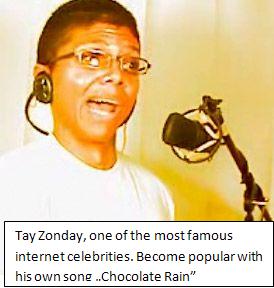
Latvian internet Celebrities
By Kārlis Kocers
 Internet media play a big role in our life. There are not only ordinary celebrities anymore but Internet celebrities and even in small countries like Latvia.
To be an Internet celebrity you don’t even have to reveal your real name, or go out of your house, to be well known. All it takes to become an internet celebrity is a computer, a connection to the internet, some fans or subscribers and some interesting, mostly funny, information long with a luck.
As more people go on-line, and more people try to entertain and become successful via Internet. Few have lasted long enough to become a celebrity. Usually they are one hit wonders.
There are loads of people whose Internet videos have recorded over 1, 000,000 views, but they aren’t considered to be an Internet celebrity. To become one you have to have a fan base and post your videos regularly. Most successful celebrities earn serious money through advertising and merchandise sales. It has become their full-time job.
For example, Fred, youtube.com all time hit became popular by making videos, where he appeared acting as a some kind of toddler, with a high pitched voice which sounds quite funny. It is hard to imagine his face when somebody told him few years ago that his home-made videos would reach approximately 30 million people.
It’s very hard to become an Internet celebrity if your only language is not English. But still you can become a local Internet celebrity. One of the most successful local Internet phenomenon in Latvia is werkis2, two local guys who become popular with their videos.
“For a start we just wanted to entertain ourselves and our closest friends. We never thought about how popular our videos would become” says UDZI, one of the members of the known duo. “Their success started with videos, where they wrote down, sound a like, lyrics in Latvian for Indian music videos,” he says.
“When people in Latvia noticed our videos it become an Internet meme, we got our first ratings, comments and subscribers. Also we noticed that people want to hear a lot of swear words. So, UDZI and I decided to make more videos with misheard lyrics.” says the godfather of one of the first local celebrities in Latvia, MX, other member of project “werkis2”. Their most famous made video got almost 300,000 views, which for Latvia is an unbelievable number.
The most successful video to this day on youtube.com from Latvia is “Musiqq” music video – “Abrakadabra”, which gather more than half million views. If we put in mind, that in Latvia there are only 2.2 million people, these results are astonishing. But there is a difference between internet celebrities, who gained their fame only trough internet and celebrities who uses every kind of publicity they can get.
For those who don’t have a huge resources. The Internet might be a good place to become famous.
Enjoy and join! Fonofest & Fonoclub
By
Oskars Treimanis
On July 16, 2005, the music and sports open air festival Fonofest was first organized. Three years later, in the autumn of 2008, a club with the same name, the Fonoclub, was opened in Cesis. The person organizing both the festival and club is Lauris Sildniks, who is also lead singer of metalcore band Enhet.
The organizing crew also includes his two younger brothers – Marts and Jānis as well as a bunch of loyal friends. Fonofest and Fonoclub are popular with very many young people who want to party just get away from daily routines.
Recreation has a huge role in young Latvians lives, and so that is why the Fonofest VI will be held this year July 9 – 10 for the sixth time. Fonofest is a celebration of sound and rhythm. Fonofest provides the opportunity to spend two carefree summer days in a natural and informal environment. Two main components – sports and music are mixed together providing a in very wide range of activities. Festival takes place near Cesis. Last year it was attended by 6.500 people.
“With the help of music and sports even strangers can become friends and exchange experiences and this is the aim of Fonofest. Everyone who takes part in the festival is part of its great atmospher”, says its web page – Fonofest IV. This year, as in every year before, there will be tournaments of beach volleyball and football, performances of a wide range of bands such as – Dzelzs Vilks, Astro’n’out, Skyforger, Satellites LV, Roberts Gobziņš, Insane, Endrive, My Ocean and many others including local guest DJs. The main headliners are not annonounced yet.
(Official Fonofest promo video 2009 – http://www.youtube.com/watch?v=q4xWdN97krc)
The Fonoclub – a small but special club is located in Cesis. It is special because every weekend there is a live concert or themed party. The program is tends toward alternative music with rare exceptions. Fonoclub has hosted many famous Latvian artists – Sanctimony, TāTāTā, Toms Grēviņš and Transleiteris, who has many popular song parodies in youtube with more than 200,000 hits, and many other local and international performers. But the biggest hit and most attended party for 2 years is the Treniņtērpu balle (tracksuit party)(pictures from tracksuit party), where the dresscode of the evening is a tracksuit.. Also very popular is beer drinking and beer barrel holding contest with prizes from Cēsu Alus. Other themed parties have included nurse and doctor, country, beach and christmas parties.
(Trenniņtērpu balle – http://www.youtube.com/watch?v=v4mA286ZiJQ)
Lauris Sildniks, the owner of the Fonoclub and the main organizer of the Fonofest says, ”It all started at the end of secondary school. The band Enhet was formed. We started to play some gigs. Everything went on, then Fonofest was born, later Fonoclub” Lauris makes it sound as if it was very easy. ‘’The opening of Fonoklub was a very important event for me. I feel good when my work is evaluated; i feel good when the club is full of people; it also gives me the will and strength to carry on.” When asked about what this club has, that others don’t, Lauris answers ’’We have a plannned program for a long time ahead. There are many qualitative live concerts, thematical parties, competitions planned for weekends. I can count on my fingers how many clubs in Latvia have this too.”
Follow Fonofest on myspace, twitter and facebook.

renewed clone of “Tur kaut kam ir jabut”
By
Anna Maklakova
Latvia’s most famous band Brainstorm is releasing it’s third version of it’s original album called ”Tur kaut kam ir jābūt”, which is in Latvian. The second version of the album was in Russian and was called ”Шаг.” The third version is in English and is called ”Years and Seconds.”
The band is very excited about the upcoming album and has spent a lot of time making and recording it. A lot of famous and talented musicians are participating and writing lyrics for the new album. Including Fran Healy, leader of the English band Travis, who wrote lyrics for the song called ”Count My Fingers.” Ken Stringfellow, a member of R.E.M., helped with a song called ”Begging For Your Starlight.”
”Years and Seconds” was released March 15 in the Baltic States, which is when Brainstorm began an international tour, performing in London, Tallin, US and other countries.
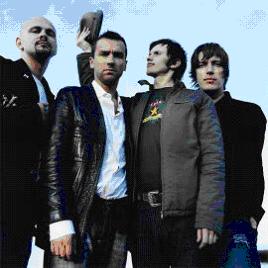
Picture taken from: http://www.airbaltic.com/upload_pic/sponsorship/brainstorm.jpg
http://www.tinydl.com/musics-and-clips/240198-brainstorm-years-and-seconds-2010.html
Music underground
By Kārlis Muižnieks
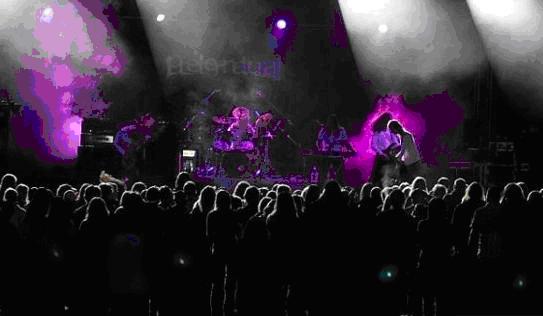 Behind the shiny and dazzling lights of popular mainstream music, there is a completely different world with almost no shimmer lights at all. In shady basements, bars and clubs with a stage and only a handful of people listening music is played by the inspired and rebellious. In underground music events the main focus is on the sound, the feeling and the endless nights of true rock energy. This place is a fighting ring where every band is struggling to get noticed.
While everyone is faithful to their ideals of playing and listening to fresh and energetic music the small audience can be a disappointment. People who still have the courage to do something different say it takes an awful lot of energy. Ivars Kalniņš who has been in an underground rock band for 8 years and has remained a faithful audience member of many other underground bands says that people are getting lazy.
“Some 6 years ago people went to every rock festival and every rock concert that they could get to and still be fresh at work the next morning. Now for some of them it is easier to stay home and do nothing. The way we live today has changed underground, but maybe for the better.”
To a newcomer, underground concerts seem a little strange. Bands start to play at 9 in the evening, which is ok, but then continue until 4 or 5 in the morning. Rarely do these last bands have an audience, but playing on stage is everything, and they will do it despite the fact that there are no people listening. While these events usually are exhausting, to not only the musicians but he audience, still there is a strange beauty to all of this – the willpower and passion to continue.
Usually these events lack good management and advertising, which results in low rates of attendance. Because of this, there is sometimes no pay to the bands or the club owners. This hurts the development of underground music and makes survival much harder. In the end, a lot of people become frustrated with this situation which affects the future of the underground movement.
There are several places in Riga where underground music concerts occur, but if you want to come across some good quality ones, the following are suggested: Melnā Piektdiena, 16. Korpuss, and the infamous club Depo. These are the places where every young band wants to play and feel what it means to be in front of an audience. And then, when the air is thick and the stage is hot, the biggest adventure of the weekend begins.
SBL which is ok
By
Krists Bērziņš
Student basketball league (SBL) is one of the largest tournaments organized for students in Latvia. This league is for all Latvian universities to compete and for top honors.
SBL was founded in 2002 and in the first season 7 teams participated in the tournament. In 2003 SBL encompassed basketball for all of Latvia. During 6 seasons 663 players have participated in this league.
Since the 2006/2007, season the league has been sponsored by SEB, one of the biggest banks in Latvia. Also partners are Molten, but informational support is ensured by inbox.lv and sportacentrs.com.
This season 10 universities participated in the tournament with first place in the regular season taken by School of Business administration Turība.
University of Latvia (UL) has participated in SBL from the first season and always has been one of the favorites. In this regular season UL finished in fourth.
Head coach M. Zībarts said the first part of the season was bad, but in the second round UL won 8 games out of 9 and earned a place in the in playoff’s.
Talking about the league Zībarts said, organizers have to consider which players are allowed to participate (i.e. professional players) and their restrictions in regard to playoff games. (point 3.6.).
G. Justovičs, one of the players for Latvia University of Agriculture (LLU) team said, “SBL organization is ok. This season almost all games were at Secondary school No. 49, which is very comfortable.” He added that the level of leagueplay is good too.
“Almost all teams are in the same level, so games are interesting,” he said.
To recruit players some of the universities offer incentives like tuition fee discounts. For example, on the UL team, two players had tuition fee discounts in the first semester. Also Justovičs said that he doesn’t have to pay for this semester, but he also admitted that other players with worse statistics don’t have any discounts.
Of course we can’t compete with Americans who have the biggest and strongest basketball league in the world, but we hope in the future, our league will be a good beginning for many new basketball stars.
Here is little insight from last year play off’s: http://www.youtube.com/watch?v=hmq2_VqJUgY
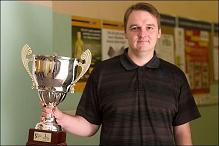
(M. Zībarts the head couch of University of Latvia basketball team. Source: UL foto archiev)

(G. Justovičs player of Latvia University of Agriculture basketball team. Source: http://www.sportacentrs.com)
Skijoring, born and raised is Latvia
By Davis Valdnieks
It is believed that skijoring was born in Latvia a few years ago. This is a sport where the skills of each individual participant are very important.
Skijoring races usually are held on closed tracks in wintertime when there is enough snow. Basic rules are just to be first after doing several laps. But what is skijoring?
It includes two guys, maybe even girls, one rope, one motorbike and one pair of skis. All the teams which are formed in this exact way stand on the start line at the same time; they wait for the chess board flag to be waved in front of them, and the race begins.
Those handling the bikes push the throttle as hard as they can and as hard as the rules of physics allow – sometimes they strive too hard and the bike volls over on its back wheel before crossing the start line. If the start is successful the person on skis is pulled real hard onto to the narrow track alongside with other teams.
An important part is to avoid injuries. Skijoring is really dangerous, because skiers and motor bikers are really close to each other and skiers are hanging onto ropes behind the riders so they can easily get angled in each other’s ropes and bikes can crush into each other.
Near the track there is a ambulance waiting in case of an emergency, but the doctor who treats the wounded (Andris Mozans) says, “Well I have been on duty for skijoring races for several times now, and there haven’t been so many accidents as one might think. Despite its dangerous nature I like skijoring; it is really interesting! Today I had one guy who fell on the bike during the race; he had a torn wound, but he will be fine;” said Mozans.
According to sportsmen, although skijoring was born in Latvia races are now being held in the Czech Republic and Poland. Thanks to the long, cold and snowy winter it has gotten really popular in our country. Each event is covered by the television program, “Ātruma cilts” and there are two leagues – one for professionals and another for beginners.
Latvian champion Kristaps Krums, a motorist, says, “It’s a team job; if I am bad, there’s no way a skier can pull the race off by himself and the other way around!”
Find out more information about skijoring here: http://www.skijorings.lv/
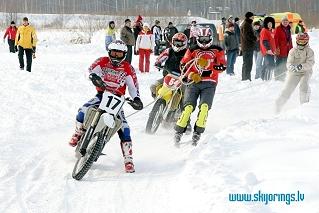
Babite, March 2010, fight between the professionals
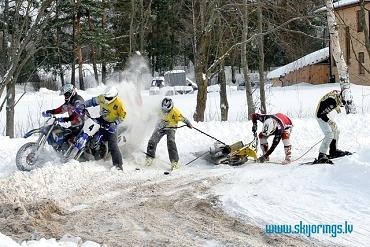
Last skijoring event in Babite, March 2010-03-18
Charmed or infected by „Twilight”?
By
Anna Maklakova
”Twilight” is movie, which is very popular and has caused a big sensation around the world. Some say that it only appeals to a 15-year-old girl, while others disagree. But no matter what, ”The Twilight Saga: New Moon”, which premiered Nov 20, 2009, raked in 72,7 million[1] on its first day. http://www.imdb.com/title/tt1259571/
Of course, it is obvious, that ”Twilight” is a ”girl’s movie” – romantic, dreamy, filled with love and passion. All this is accompanied by two handsome men – a vampire and a werewolf, who fight for one girl’s heart. Every girl in the world, watching this movie, can imagine herself in the place of this lucky one named Bella. This is the key to success and the reason why thousands of girls around the world worship this movie.
But what do guys think of it? And why do haters hate it so much?
”I went to watch, ”The Twilight Saga: New Moon” with my girlfriend last year” says Jānis, a 24-year-old student. ”These were a very painful two hours in my life, I can say that for sure. I found this movie kind of predictable, lame and a little boring at times. There was almost nothing about this movie which I liked. Well maybe except when it ended” he laughs.
”I watched ‘Twilight’ with my girlfriend at home recently” says Renārs, a 29-year-old bartender. ”The plot I found pretty interesting, but what really disturbed me were the naked, perfectly-shaped bodies of these men, constantly emerging on the screen, which made me feel like a fat, old cripple. Guys, don’t ever let your girlfriends persuade you to watch this movie, no matter what they say. Seriously!” says Renārs.
Alise, a 26-year-old shop assistant is proof of the fact, that not only 15-year-old girls are devoted fans. ”At first, when I watched the first movie, I really couldn’t understand what all the fuss was about. But then, after some time, I decided to watch it again and that’s when the Twilight-mania started. Now I have read all the ‘Twilight’s’ books and watched both movies like a couple hundred times” she says.
Never mind the fact that in November 2009 a second sequel of ‘Twilight’ came out, but the third sequel ”The Twilight Saga: Eclipse” will premiere in the U.S. June 30. Excited?
Watch trailer for ”The Twilight Saga: Eclipse” –
http://www.youtube.com/watch?v=Q1D5goGz0SY
[1] http://celebrifi.com/gossip/New-Moon-takes-record-727M-box-office-bite-AP-1070920.html
Close to nature: Eco-houses and villages
By Linda Parfenoviča
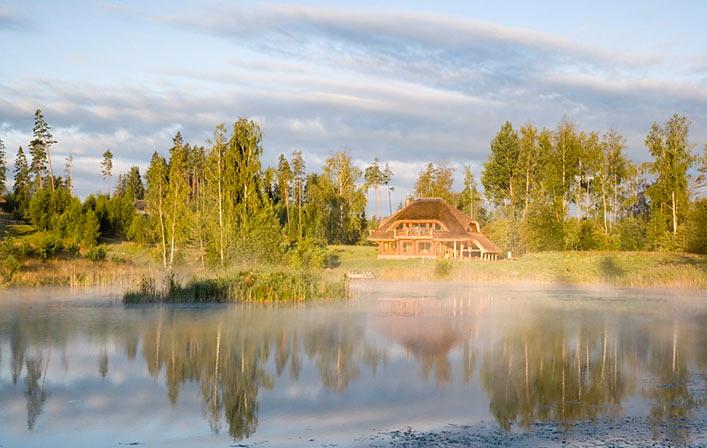 Moving to a nature-friendly house or even a village is a big step towards sustainable living. Alternative energy technologies replace traditional energy sources, houses are being built from environment friendly materials and people seek more green technologies to benefit from nature`s treasures.
And at the same time people try to live with nature itself, new ways of living are also being sought. Eco-villages have become more and more popular around the world and some sources assert that there are about 4 – 5,000 nature-friendly villages.
If not fully green, then one of the most naturally built architecture examples in Latvia is the village Amatciems near Cēsis. Besides renewed land relief, the author of the idea Aivars Zvirbulis ensured that next to every house is at least one pond. Houses are built from natural materials and fences are not allowed.
Daina Narkeviča, an inhabitant of the Amatciems, had the opportunity to take a part in the development of the village and work in administration. When asked about her choice to live in such countryside, Daina says, “I need a rural landscape, meadows, flowers, opportunity to swim by my home, at any time and places to go for a walk or ride a bicycle, or even ski in the moonlight. And at the same time, I don`t feel lonely here. There are other people living around me. And all necessary communications are accessible- water, warmth, Internet, etc”, says Daina.
In a broader aspect, eco-villages are sustainable, self-sufficient systems, where people can provide for themselves everything they need within the community with a low-impact way of life. According to Global Eco-village Network, to achieve this, “villages integrate various aspects of ecological design, permaculture, ecological building, green production, alternative energy, community building practices, and much more”.
One example of such villages is Healing Biotope 1 Tamera in Portugal, where people already provide themselves with food and solar energy. At the same time Tamera is also an international training and experimental site, where approximately 200 people live, study and work in order to build an example of peaceful living between people and with nature.
In Tamera like in many other eco-villages, people live like on a commune, which tries to “live on a communitarian base instead of a private one”[1].
A list of many other eco-villages can be found at Fellowship of International community homepage and also on Global Ecovillage Network.
In any case, to live shoulder to shoulder with nature is not a simple decision for everyone. Inese Osīte, who is also an inhabitant of Amatciems, thinks it might be difficult to live in such a village especially for those, who are used to the life in a city.
But for Inese her desire to live in the village was like a scream of the soul.
“This is very special place. You are in one place all the time, but in the same time everything around you is changing. Nature doesn`t stop playing and you are a part of this game. There are no winners or losers; people simply flow together with this place.”
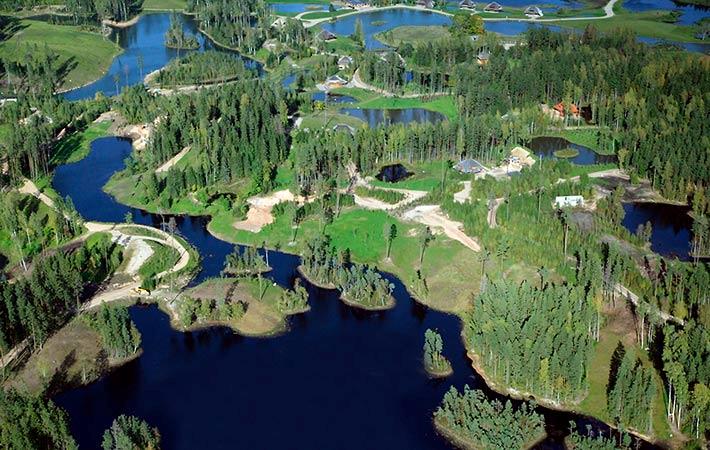
Amatciems. Picture from http:// www.amatciems.lv
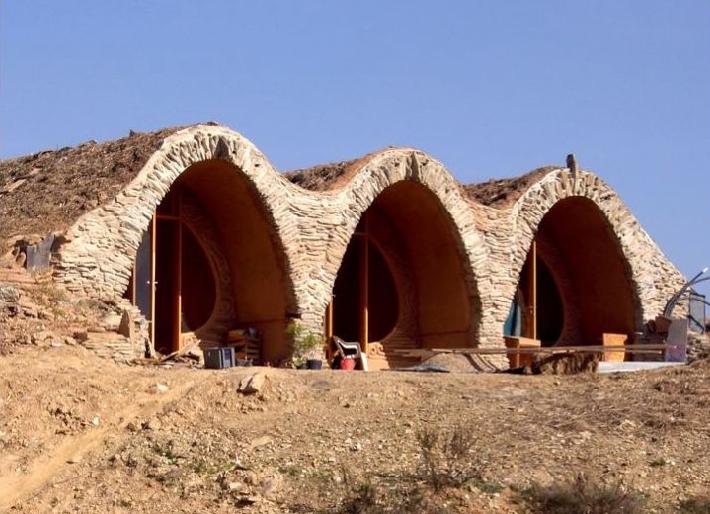
House in Healing Biotope 1 Tamera. Picture from: http://openfarmtech.org/weblog/?p=869
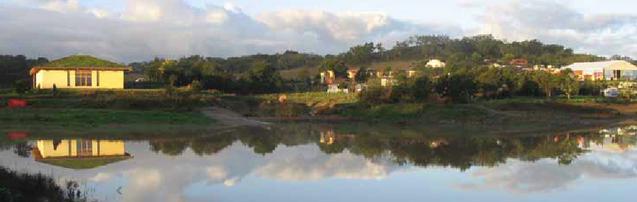
Healing Biotope 1 Tamera. Picure from http://www.wiserearth.org/uploads/event/98308605ac5420f2a14480c74ab7af48/holzerseminars.png
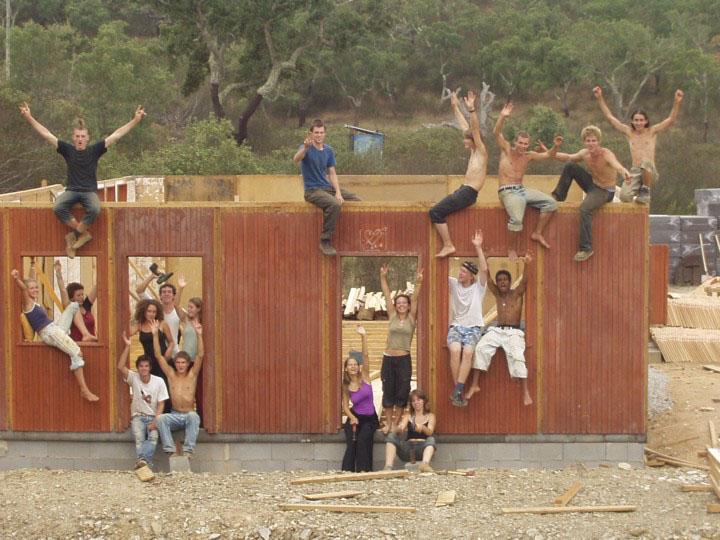
Building house at Healing Biotope 1 Tamera. Picture from http://www.selba.org/EngTaster/Social/Community/ThePowerOfBC.html
[1] http://www.tamera.org/index.php?id=447&L=0
Born-again clothes
By Aigars Lazdiņš
On Saturday mornings the only place in Riga’s Torņakalns district that shows any kind of activity is the deaconry house of Rīgas Lutera Evangelical Lutheran congregation. Poor people queue up for handouts of free secondhand clothes there every week.
“We let in five people at a time so they can sort through what we have without having to jostle through a crowd. Everybody can take as many clothes as they want. Our usual visitors include recently released prisoners, homeless people, single moms with small children as well as large families,” explains Dzidra Pole who is in charge of this charity work. Of course those are not the only people who come by.
“For example if your house is destroyed by fire, you can of course come here to get something to wear instead of the clothes that got burnt,” she says.
As with all charity organizations, the deaconry gets its funds from donations. The clothes are mostly donations from congregation members.
“When people pass away, their relatives sometimes donate their clothes. We also have a lot of children clothes – they grow so fast, that their clothes don’t wear out, and their moms donate the clothes,” explains Pole.
Of course not all donations are really what you would call charitable.
“Sometimes people bring in old clothes that are full of holes, clothes that have grown moldy or gone out of style decades ago. In short they try to use us as a free trash dumpster. But of course we cannot offer such clothes to those in need – they may be poor, but that doesn’t mean we can demean them – so we have to throw them out, and we are not a rich organization, trash container rentals cost money,” says Anita Ansone, another clothes program volunteer.
Despite these difficulties, the deaconry’s clothes program has endured for quite some time.
“The program has worked since 1994 and at first was meant only for congregation members. All our donations could be laid out on a couple of tables,” remembers Pole. But it has grown with time – now the clothes clutter up a whole room and donations are handed out to approximately 30 people every Saturday.
“We have never had our clothes stockpile depleted, but it is possible that this could happen, because of increasing demand,” says Pole.
“The word ‘deacon’ means ‘servant’. The deaconry is a kind of Christian social work organisation,” says head of the deaconry Ieva Ansone. The clothes handouts are just one of the several charity programs conducted by the deaconry. She explains that the deaconry also organizes many kinds of activities and excursions for members of the congregation who couldn’t afford it otherwise, sends out care packages to poor members of the congregation and so on. A more thorough list of activities is available in their website.
Unfortunately there are no statistics of the amount of Christian charity work being done in Latvia, but Ieva Ansone says that the Rīgas Lutera congregations’ deaconry is one of the financially best off.
“Of course our income is dropping, but since our workers are all volunteers, this should not stop us from working,” predicts Ieva Ansone.


 Yellofrog