Close to nature: Eco-houses and villages
By Linda Parfenoviča
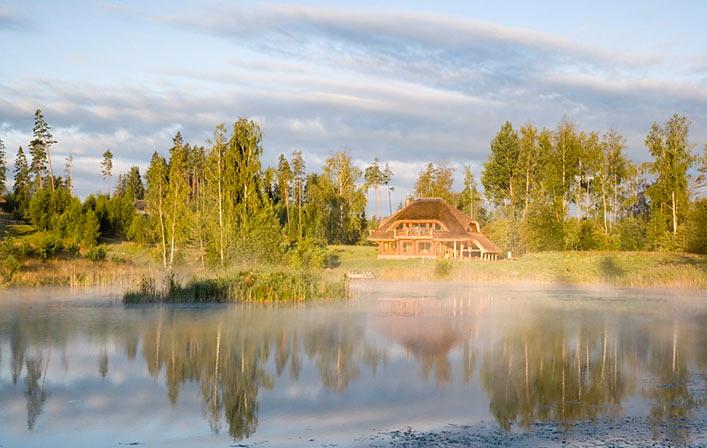 Moving to a nature-friendly house or even a village is a big step towards sustainable living. Alternative energy technologies replace traditional energy sources, houses are being built from environment friendly materials and people seek more green technologies to benefit from nature`s treasures.
And at the same time people try to live with nature itself, new ways of living are also being sought. Eco-villages have become more and more popular around the world and some sources assert that there are about 4 – 5,000 nature-friendly villages.
If not fully green, then one of the most naturally built architecture examples in Latvia is the village Amatciems near Cēsis. Besides renewed land relief, the author of the idea Aivars Zvirbulis ensured that next to every house is at least one pond. Houses are built from natural materials and fences are not allowed.
Daina Narkeviča, an inhabitant of the Amatciems, had the opportunity to take a part in the development of the village and work in administration. When asked about her choice to live in such countryside, Daina says, “I need a rural landscape, meadows, flowers, opportunity to swim by my home, at any time and places to go for a walk or ride a bicycle, or even ski in the moonlight. And at the same time, I don`t feel lonely here. There are other people living around me. And all necessary communications are accessible- water, warmth, Internet, etc”, says Daina.
In a broader aspect, eco-villages are sustainable, self-sufficient systems, where people can provide for themselves everything they need within the community with a low-impact way of life. According to Global Eco-village Network, to achieve this, “villages integrate various aspects of ecological design, permaculture, ecological building, green production, alternative energy, community building practices, and much more”.
One example of such villages is Healing Biotope 1 Tamera in Portugal, where people already provide themselves with food and solar energy. At the same time Tamera is also an international training and experimental site, where approximately 200 people live, study and work in order to build an example of peaceful living between people and with nature.
In Tamera like in many other eco-villages, people live like on a commune, which tries to “live on a communitarian base instead of a private one”[1].
A list of many other eco-villages can be found at Fellowship of International community homepage and also on Global Ecovillage Network.
In any case, to live shoulder to shoulder with nature is not a simple decision for everyone. Inese Osīte, who is also an inhabitant of Amatciems, thinks it might be difficult to live in such a village especially for those, who are used to the life in a city.
But for Inese her desire to live in the village was like a scream of the soul.
“This is very special place. You are in one place all the time, but in the same time everything around you is changing. Nature doesn`t stop playing and you are a part of this game. There are no winners or losers; people simply flow together with this place.”
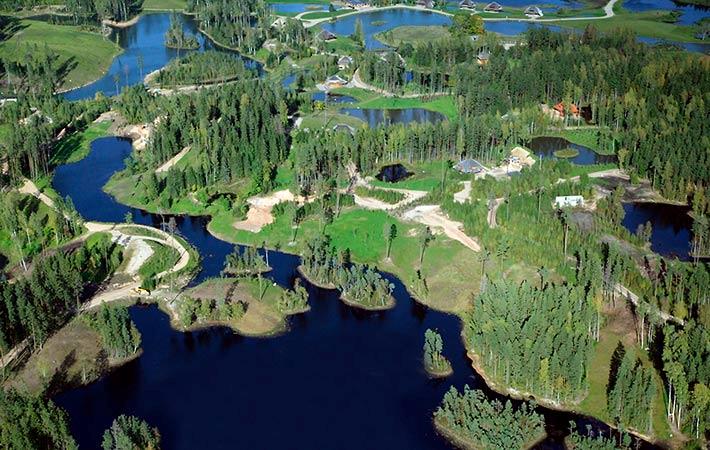
Amatciems. Picture from http:// www.amatciems.lv
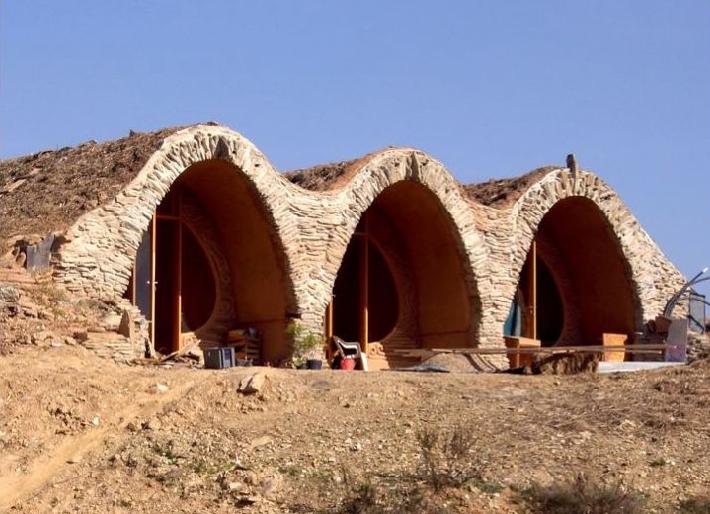
House in Healing Biotope 1 Tamera. Picture from: http://openfarmtech.org/weblog/?p=869
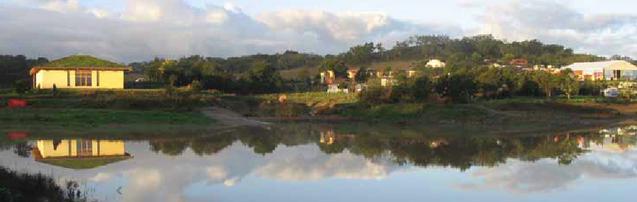
Healing Biotope 1 Tamera. Picure from http://www.wiserearth.org/uploads/event/98308605ac5420f2a14480c74ab7af48/holzerseminars.png
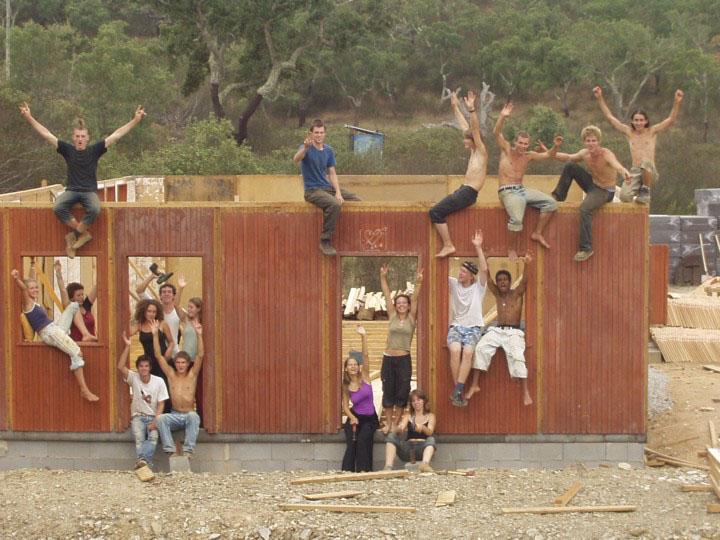
Building house at Healing Biotope 1 Tamera. Picture from http://www.selba.org/EngTaster/Social/Community/ThePowerOfBC.html
[1] http://www.tamera.org/index.php?id=447&L=0


Living in the city is far more sustainable. And more fun, if you’re not a complete misanthrope.
It’s great to read something that’s both enjoyable and provides pgrmataisdc solutions.
Hmm it appears like your site ate my first comment
(it was super long) so I guess I’ll just sum it up what I wrote and say, I’m thoroughly enjoying your blog.
I as well am an aspiring blog blogger but I’m still new to everything. Do you have any points for rookie blog writers? I’d certainly appreciate it.
Just want to say your article is as astonishing. The clarity in your post is simply cool and that i could suppose you’re an expert in this subject. Well with your permission allow me to grab your feed to keep updated with forthcoming post. Thank you 1,000,000 and please keep up the rewarding work.
Hello, I believe your website may be having browser compatibility problems.
Whenever I look at your website in Safari, it looks fine however when opening in IE, it has some overlapping issues.
I simply wanted to provide you with a quick heads up!
Other than that, wonderful site!
Hi, i think that i saw you visited my web site thus i came to “return the favor”.
I am trying to find things to improve my site!I suppose its ok to use a few of your ideas!
!
Hi mates, its impressive piece of writing regarding
cultureand entirely defined, keep it up all the time.
You will find many varieties of incentives for employees that
cost a similar yet offer a broad various elements.
However, within the long run, these designers preserves parents money by cutting down around the number of times parents need to buy new outfits.
Hello to every one, the contents existing at this website are genuinely remarkable for people knowledge, well, keep up the good work fellows.
Thank you, I’ve just been looking for information approximately this subject for a while and yours is the best I’ve came upon till now.
But, what about the bottom line? Are you certain in regards to the source?
I’m impressed, I must say. Rarely do I encounter a blog that’s equally educative and interesting, and without a doubt, you’ve hit the nail on
the head. The issue is something not enough men
and women are speaking intelligently about. I’m very happy I found this in my search
for something relating to this.
I seldom comment, but after reading through a great deal of remarks on Close to nature: Eco-houses and villages | Yellofrog.
I do have 2 questions for you if you do not mind. Is it simply me or do a few
of the responses come across like they are left by brain dead individuals?
😛 And, if you are writing at additional online sites,
I would like to keep up with anything new you have to post.
Could you list of the complete urls of all your social networking pages like your Facebook page,
twitter feed, or linkedin profile?
Yesterday, while I was at work, my sister stole my iphone and tested
to see if it can survive a thirty foot drop, just so she can be a youtube sensation. My iPad
is now destroyed and she has 83 views. I know this is completely off topic but I had to share
it with someone!
Fastidious replies in return of this matter with firm arguments and explaining the whole thing on the topic of that.
Very rapidly this website will be famous amid all blogging viewers, due to it’s good content
I like it when people come together and share views.
Grreat website,keep it up!
This iis a topic which is close to my heart…
Take care! Exactly where are your conntact details though?