Don’t stress, use yoga
By Madara Zvejniece
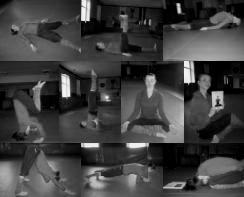
picture by Madara Zvejniece
‘‘Yoga balances human’s physical, emotional and mental spheres. The imbalance causes stress, which is common in contemporary life. We live in a century of stress, and it`s only natural that people try to find instinctively a way to deal with the contemporary lifestyle and haste. That is why yoga is so popular nowadays,’’ says Agnese Viksnina*, a yoga teacher and the owner of the dance group, ‘‘Fandango’’ (www.fandango.lv).
Student life also is stressful, and exam time causes a lot of frustration, so yoga and breathing exercises may be a way to find peace and calmness.
Even though yoga comes from India and Eastern countries, it is appreciated also in Western cultures (more and more people in Europe and the United States go to yoga classes). It is not only something that has come into vogue thanks to many celebrities who do yoga, but also because of its effects on the body and mind. Those who practice yoga are more harmonic and cool-headed, furthermore they know how to deal with stress (for instance, before exams or job interviews).
Many people think that yoga is something difficult, and it demands good physical preparedness. Actually, there are many levels of yoga and everyone can do it.
Viksnina says, ‘‘The real effect of yoga is appreciable when it is done regularly and diligently. The simplest exercise is to sit down with a straight back, cross the legs, close the eyes and breathe quietly. Then you have to observe the emotions in your body and also your breathing; you have to release your thoughts that try to get in your consciousness.’’ http://bit.ly/cvnqsi **
Yoga teacher Viksnina says, ‘‘The first law of ‘how to pass an exam’ is to come to the exam!’’ She also says that yoga teaches how to perceive life and different events, so there is no stress or it is rare.
She says, ‘‘If I’m disciplined and study regularly, I don’t have to learn everything in the last night, so is there a reason for stress? But if there is no chance to prepare properly for the exam, you have to find all the creative energy in yourself and you have to go to the exam. [..] And if I don’t pass it? Will I be a worse person? Will my mother be angry or will my boyfriend leave me? What are the true values of life? I will pass it next time!’’
Yoga does not mean that people just try to put their legs around their neck or do something physically difficult. There are many types of yoga, for example, hot yoga (Hatha yoga) which ir practiced in a warm room and the exercises are not difficult, but at the same time the result is impressive and after the yoga class you feel agreeably exhausted http://bit.ly/4goQP7 . Yoga also requires breathing exercises and meditation.
There are many places in Riga to do yoga. As was mentioned before Viksnina teaches yoga in her dance studio but there are also other yoga centers such as: http://bit.ly/bMrhFI , http://bit.ly/cm4Wbq , http://bit.ly/axxqOe .
Viksnina says, ‘‘Nowadays a human being thinks that he/she is rational and logical, that he or she can control his/her life. Unfortunately, it is only an illusion. In reality, it is our mind that controls us. [..] If a person becomes the master of his/her mind, he/she uses it as an effective instrument in everyday life, in art, in work. The mind can discover magical things, but it cannot work without a break.’’
Meditation and good sleep is very important for students. Try yoga and forget sleeping pills!
Everyone wants a better and more harmonious life… Why not start today?
* Many thanks to Agnese Viksnina for answering the questions about yoga!
* *Thanks to dancer Beate and judo athlete Sabine for co-operation J
Smile, tomorrow will be worse!
By
Zane Leite
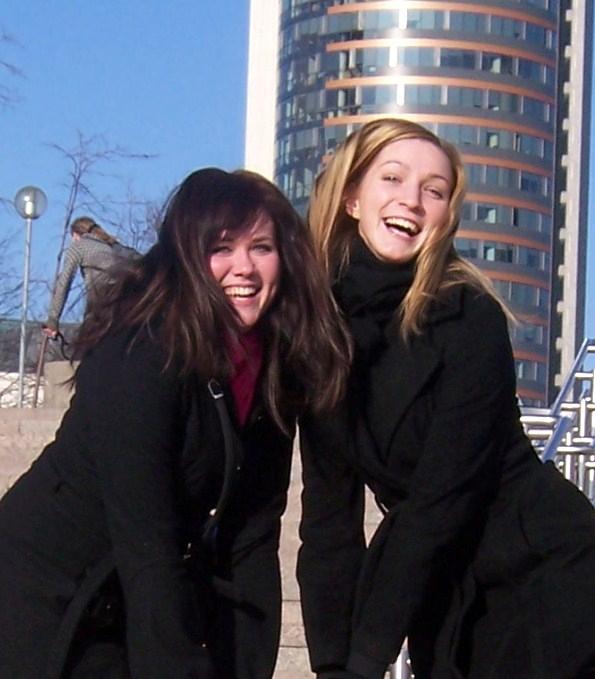
Photo by Zane Leite
In thinking about reasons why people liek jokes, first thing that comes to mind is jokes are fun and fun makes us laugh. Asking friends why they like to laugh there are few surprises. The most common answer is “It just makes me feel good”.
But why does it makes us feel good?
Lina says that she doesn’t worry about causes of natural reactions that makes her feel good.
“If something makes me feel bad, then I think about the reasonsforf it, but if something makes me feel very good, I just enjoy it” – she explains.
There is no any other living being capable of laughing. It is not only the world’s common language but also an essenial component in maintaining good mental and physical wellness. Laughter is a physiological response to humour. Reccent research at the Stanford University in the U.S. shows that women laugh more at verbal jokes than at funny situations. Besides, women laugh longer than men.
There is quite a range of positive heatlth benefits from laughing. Simple laughter improves immunity, lowers a hormone that is produced by stress, stimulates blood flow, enhances respiration and also raises a pain threshold. But that’s not all goodness developed by laughter. A peal of laughter strenghtens the diaphragm and abdominal muscles and even burns calories. In a word, laughter makes us feel good. More about laughter impact on health is here.
People love to laugh and that’s why there is an industry built around laughter – jokes and sitcoms are made to get us laughing. Also there is an International Laughter Club that offers Laughter Yoga.
The power of laughter encouraged an Indian Physician Dr. Madan Kataria to launch the first Laughter Yoga at a park in Mumbai in 1995. This year Laughter Club celebrated its 15th Anniversary and has became a worldwide phenomenon with more than 6000 Laughter Clubs in about 60 countries. The idea of a Laughter Club is to bring a good health,joy and world peace through laughter. How Laughter Yoga works is explained here.
Choose a comedy of Top 20 Comedy movies and make yourself feel good or watch this video and ensure that laughter makes laughter!
Get your money back!
By Klinta Dzene
Latvia law allows refunds for money paid for taxes or overpaid in taxes, including money invested in higher education. To apply for refunds for education costs contact State Revenue Service (SRS).
This year it is possible to retrieve up to 300 lats from overpaid taxes. For calculation of retrievable sum take 23% from the money paid for education + money paid for medical services. The declaration as well as a copy of the payment check is required, so if you are a student, who has just started studies – remember to save the payment checks as proof of transaction.
While this is not a common knowledge – economic students at University of Latvia hear about it in the lectures Karīna Tarasenkova, student in the Faculty of Economics and Management says: “After having a lecture course about tax systems, there are no difficulties for me filling out the declaration before that I asked a work colleague – accountant for help.” She thinks that SRS doesn’t publish enough information about the option to return overpaid tax money yet Tarasenkova encourages students to take this step, “You can never have too much money, especially if we’re talking about students.”
This is not only an option for working students – if the money for education is paid by your parents, they can retrieve money by handing in their income declaration. (More information – http://www.vid.gov.lv/default.aspx?tabid=8&id=4475&hl=1&mod=33)
Steps to take for handling in the declaration:
1) Print out the form of income declaration. You can download it here http://www.vid.gov.lv/default.aspx?tabid=8&id=39&hl=1 (Declaration form has seven enclosures – you don’t have to fill all of them. Read here about the ones you need, as well read about required documents you need to handle in along with the declaration http://www.vid.gov.lv/default.aspx?tabid=8&id=4482&hl=1&mod=33 )
2) Find out your SRS department – http://www.vid.gov.lv/default.aspx?tabid=12&id=478&hl=1
3) Go to the department, fill the declaration and hand it in. If you have any questions consult with local staff.
This year checks for the last three years – 2007, 2008 and 2009 are eligible for refunds. The deadline for the submission of the income declaration is the end of the year, so there is no need to rush. For additional questions call SRS at 1896.
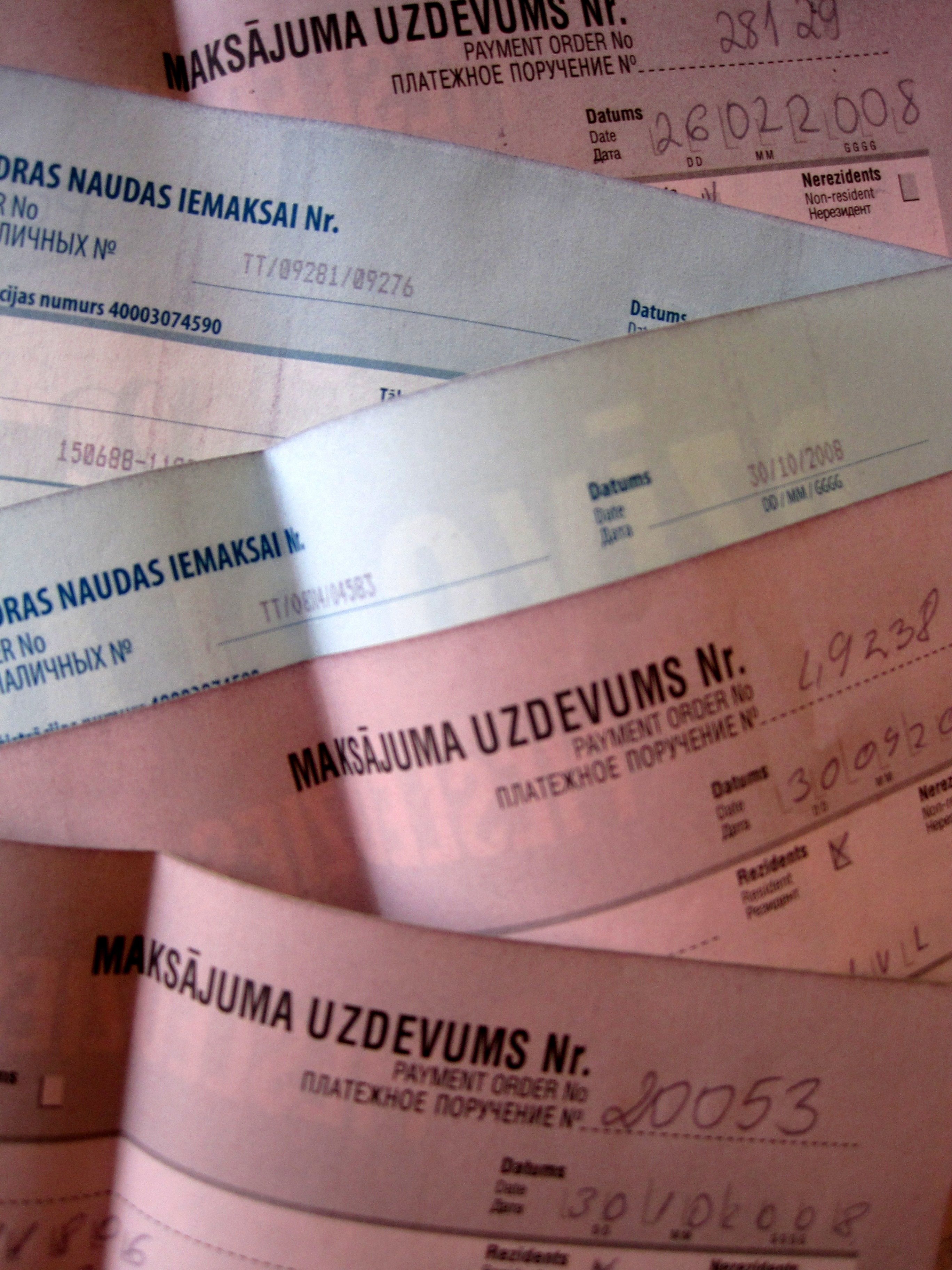
Photo by Klinta Dzene
Recycling in Latvia
People living in Riga are less active in recycling than those living in other cities in Latvia, says research done by the Latvian Green Point.
Right now there are only 4 places in Riga where you can find containers for recycled waste. But is it enough for a city of more than 700, 000 people?
“It definitely is not enough, because the small amount of containers and recycling areas is why people in Riga hesitate to recycle”, says Jana Duhovska, the marketing and communication manager of the Latvian Green Point.
Recently recycling area was opened on 27, Ganību dam. Right now this is the only place in Riga where you can dispose of all your waste – paper, plastic, glass, electronics, batteries and toxic waste . It is open every day from 9 in the morning to 7 in the evening.
Even more and more recycling areas are created and organizations like The Latvian Green Point and Eko Rīga are organising events to popularize the idea of recycling.
“Last year we organized a campaign, encouraging people to take their trash to a recycling area and getting some money for that,” said Duhovska, hoping that campaigns like this could encourage more and more people to start recycling.
Latvia is still new at the recycling business in comparison with other European countries. For example, in Denmark plastic bottle disposers are in every supermarket and recyclers get back approximately half of the amount of money paid for the bottle. As Duhovska said, “Right now, offering a reward is seen as the best solution in making recycling a healthy habit.”
On average, one Latvian produces more than 370 kg of waste every year.1 In the recycling process more than 30 percent of the waste can be reused. So recycling can significantly diminish the amount of waste piling up in the dumpsters and can give the used stuff a second life.
Latvian Green Point is hoping that the situation will change when the fees for household waste increase and it will be financially attractive to recycle.
“The people who recycle now are enthusiasts and devotees, but the future looks promising,” said Duhovska.
When talking to people in Riga about their recycling habits, most of them admitted that they recycle rarely because of the lack of special containers.
“There is only one, non-recycling container next to my house. I don’t have a car so it is really inconvenient to carry my trash bags to the other side of Riga,” said Marija, a student who lives in the very centre of Riga.
But most of the respondents said they would definitely recycle if they had containers near by. But it turned out that almost none of the people I talked with were separating the trash at home. “What for? I still dump all the trash bags in one container – sorting doesn’t make any sense”, said Arnis, a respondent who lives near the centre of Riga.
Recycling is the basic thing you can do to help the environment. Do you have any suggestions how to encourage people to start recycling?
Remember everything!
By
Zane Leite
Good memory is one of the most important requirements for a good life and successful education. Can a mind be trained and improved? The answer is Yes! There are plenty of techniques for improving memory – not only for studying for exams but for improving it in general.
Memory critical to remembering names and details of people who are important in one’s personal and professional life. Memory can be trained easily playing games on the Internet http://is.gd/aBAOr. Different games focus on face or name recall, working memory or even spatial recall.
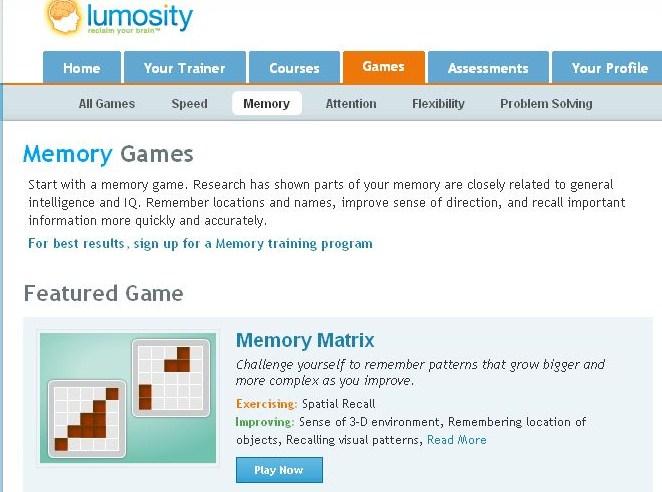
Entertaining way to improve memory – games on the Internet.
To remember difficult information, for example, for exams – regular studying, in a strucured manner with focused attention is recommended.
More information of studying techniques is here: http://is.gd/aBwa9
Volunteer who loves Latvia
By Klinta Dzene
“I finished high school in Germany and an applying for European Volunteer Service (EVS) seemed the best possibility, where you don’t need to pay much; in fact, you don’t need to pay anything at all to gain new experience,” says Sarah Flemming, 20, about her choice to work as a volunteer in Latvia.
Flemming arrived in September and her hosting organization in Latvia is Youth against AIDS (YAA). Arriving here was a matter of chance – Sarah sent applications to various organizations in Lithuania, Sweden etc., but got feedback from Latvians. Her main responsibility as volunteer is giving lectures about human rights and discrimination, but her present task is collaborating with peers to invent a simulation game, what would show and teach young people about human trafficking issues.
She likes it here very much: “I’m living here nearly 6 months; I feel I’ve become more open-minded, and I’m happy here.”
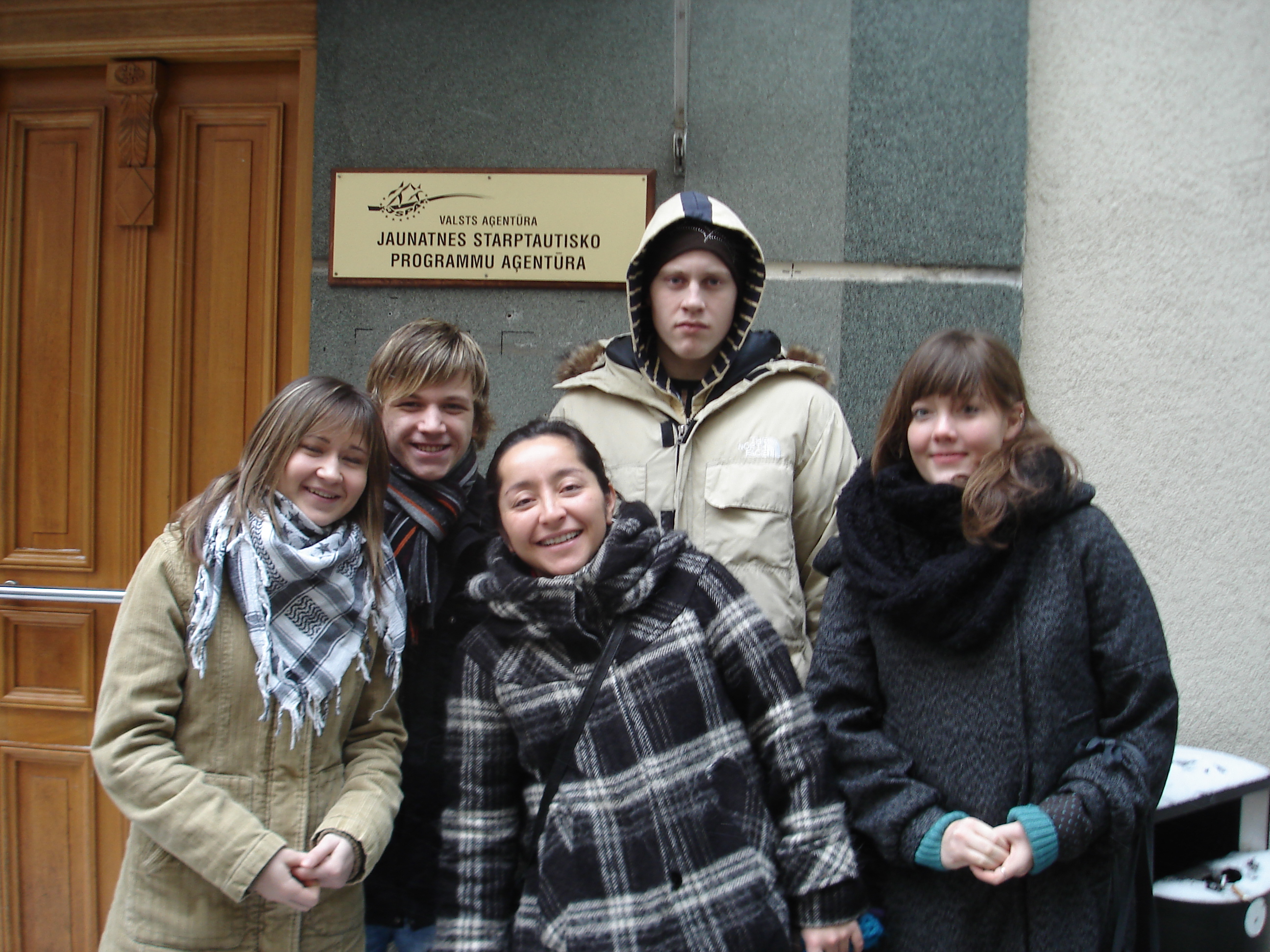
Sarah Flemming _first from the right_ in front of the National Agency which is responsible for all volunteers in Latvia
Flemming is the second volunteer working for YAA in Latvia. As hosting organization, YAA started to work last March. More about organization Youth against AIDS – http://www.jpa-aids.lv/, but EVS database of accredited organizations you can find here http://ec.europa.eu/youth/evs/aod/hei_en.cfm
Journalism on the screen
By Klinta Dzene
 Have you ever seen the romantic comedy When Harry Met Sally (1989)? In the first minutes of the film a young man and woman are sharing a car to New York and have a witty conversation about their lives –
Harry: So why don’t you tell me the story of your life.
Sally: The story of my life?
Harry: We got 18 hours to kill before we hit New York.
Sally: The story of my life isn’t even gonna get us out of Chicago; I mean, nothing’s happened to me yet. That’s why I’m going to New York.
Harry: So something will happen to you?
Sally: Yes.
Harry: Like what?
Sally: Like I’m going to journalism school to become a reporter.
Harry: So you can write about things that happen to other people.
Sally: That’s one way to look at it.
There are many ways to look at journalism as a profession, but one thing is clear – it is going to be something exciting. This could be a reason, why journalism has been depicted in so many films – from various sides.
Romantic comedies, for their part, have found ways to use journalism to tell touching love stories, for instance, Gregory Peck as a journalist gives us a good story in the name of love in Roman Holiday (1953). Or Drew Barrymore and Kate Hudson personages find their true loves writing articles in Never Been Kissed (1999) and How to Lose a Guy in 10 Days (2003).
Ethics of journalism is covered in films like Shattered Glass (2003) and Thank You for Smoking (2005). The first one is based on a true story, when a young journalist deceived the editorial staff and readers by writing false stories. However Heather Holloway (played by Katie Holmes) seduces the main character to get information and then reveals very uncomfortable details about him in her article in Thank You for Smoking.
Every journalism student tries to see film All the President’s Men (1976) – where two journalists bring down the President of the United States through investigative journalism. Burma VJ (2008) is a documentary which follows a young man, who risks his life, filming monk protests in Burma in 2007 thus revealing what is really happening in a country ruled by military dictatorship.
Media being portrayed in films can be intriguing. Which films do you like about journalists?
Discover the food world
By Anna Maklakova
Sept. 8-11 Riga Food 2010 will be held in Ķīpsala for the 15th year.
The purpose of this international food exhibition is to display Latvian cooking and hospitality, and to encourage tourism. Also, cooking specialities of other countries will be presented.
Several cook, pastry-cook and bartender competitions also will be held during the exhibition. Purpose of the events is to identify the most talanted proffesions and to demostrate mastery of skills.
Businesses from more than 40 countries are applying to participate in this event.
More information about Riga Food
Volley’s inviting
By
Dāvis Valdnieks
Mondays and Wednesdays are “volleyball days” at the Olympic sports centre in Grostonas street 6b. More information is here: http://www.lu.lv/sports/veidi/volejbols/
Everyone is invited to participate in volleyball training sessions regardless of skills and previous experience. Trainings are held by Māris Vensbergs who is a professional volleyball player himself.
Any participant can become a member of the league of University of Latvia or participate in night volleyball tournaments which are regularly organized by the sports centre of University of Latvia. The best players can earn a chance to join the volleyball team at the university and compete against other universities. For more information click here: http://www.lu.lv/sports/veidi/volejbols/sacensibas/sakv/2010/
Ever wondered how can those volleyball players be in such a great shape? Come and find out for yourself!
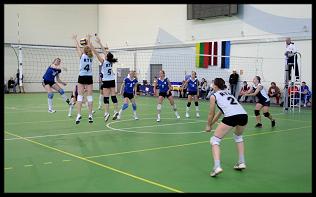
International Cup of Universities, http://www.lu.lv/sports
Run, student, run!
By
Dāvis Valdnieks
Track and field is one of the most popular sports on our planet and students at the University of Latvia can train every Monday and Wednesday from 8 p.m. – 7:30 p.m. at stadium “Daugava”.
Training sessions are led by experienced Couch Ilvis Ābeļkalns. Beginners must warm up and then experiment to find out which of the track and field disciplines is the most suitable for each individual. Check here for more information: http://www.lu.lv/sports/veidi/vieglatletika/
Everyone is welcome to participate and those ones wanting to specialize for example with 100 meters sprint will be evaluated and advised how to train.
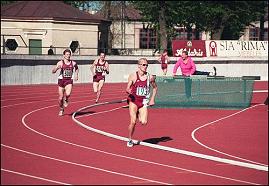
Track and field competition of Universiade, www.lu.lv/sports

 Yellofrog